

Table of Contents
- What Are UV DTF A5 Notebook Covers
- Why UV DTF Works for Notebook Customization
- UV DTF Application Tips for Notebook Wraps
- Best Materials and Surfaces for A5 Covers
- UV DTF Element Sheets for Journal Customization
- Design Inspiration and Layout Ideas
- Care and Long-Term Durability
- Frequently Asked Questions
Last Updated: September 29, 2026
What Are UV DTF A5 Notebook Covers
UV DTF A5 notebook covers are adhesive transfers designed to personalize standard A5-sized notebooks with vibrant, full-color designs. Unlike traditional heat-applied transfers, UV DTF A5 notebook covers use a strong permanent adhesive that bonds directly to smooth notebook surfaces without requiring a heat press, special equipment, or any curing time. You simply clean the notebook cover, position the wrap, apply firm pressure to ensure good adhesion, and remove the clear carrier film.

The "A5" designation refers to the notebook size, approximately 5.8 by 8.3 inches, which is a popular standard for journals, sketchbooks, and personal planners. These transfers work best on smooth, hard, non-porous surfaces like acrylic, plastic, or laminated covers. The adhesive backing makes application straightforward: there's no weeding, no layering, and no special tools needed beyond your fingers or a squeegee.
At Creations With Purpose, we've designed our UV DTF A5 notebook covers to deliver vibrant, detailed graphics that transform everyday notebooks into personalized keepsakes or finished products for resale. Each wrap features premium full-color printing and a strong permanent adhesive specifically formulated for notebook materials.
Why UV DTF Works for Notebook Customization
The real advantage of UV DTF for notebook customization comes down to simplicity and immediate results. Traditional methods, screen printing, vinyl cutting, or heat-applied transfers, require specialized equipment, multiple steps, or lengthy curing times. UV DTF skips all of that. You get professional-looking results in minutes without a heat press or additional supplies.

UV DTF element sheets and UV DTF wraps eliminate the barriers that stop many crafters from customizing notebooks at scale. No weeding means no tedious removal of excess material. No layering means no complex sequencing of transfers. No heat means no risk of melting or warping notebook covers. This efficiency matters whether you're creating one custom notebook for yourself or building inventory for your small business.
The adhesive formula used in UV DTF transfers is engineered to bond strongly to smooth surfaces while remaining flexible enough to move slightly during application. This forgiving nature makes UV DTF ideal for crafters at any skill level. Even if your first attempt isn't perfectly centered, the strong adhesion and peel-and-apply process give you room to adjust before the transfer sets permanently.
For small business owners, this speed translates directly to higher margins and faster turnaround. You're not spending hours on application or waiting for curing. For hobbyists, it means you can experiment with designs and personalization without the investment in expensive equipment or the time commitment of traditional methods.
UV DTF Application Tips for Notebook Wraps
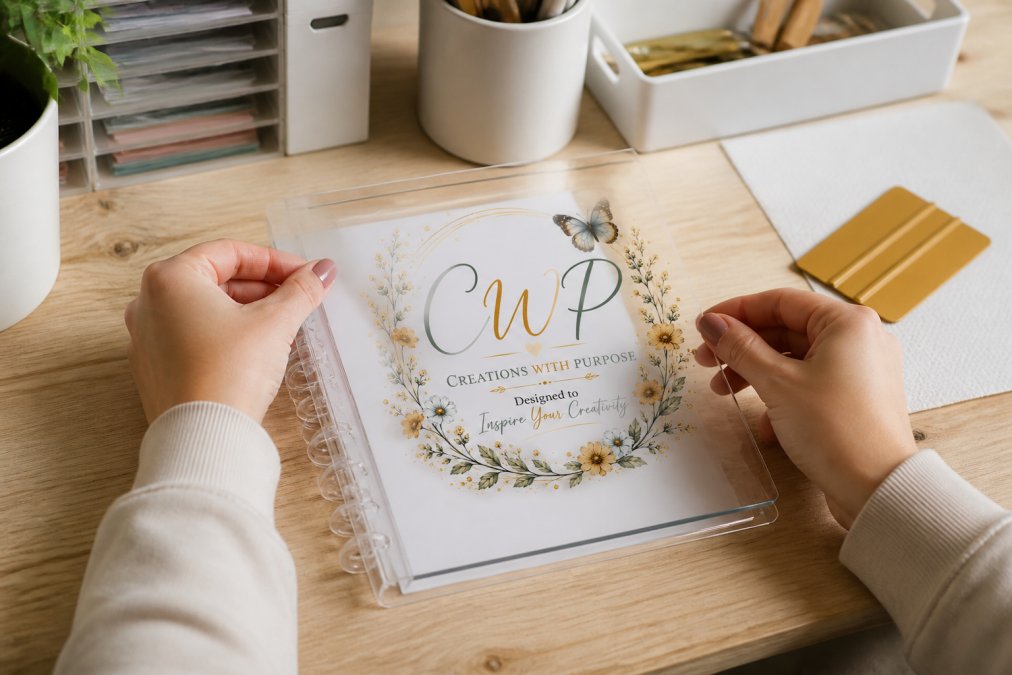
The application process for UV DTF A5 notebook covers follows a straightforward sequence, but the details matter. Start by ensuring your notebook cover is completely clean, dry, and free of oils, dust, or debris. Any residue, fingerprints, dust particles, or manufacturing oils, will create air pockets between the transfer and the surface, weakening adhesion and creating visible bubbles.
Before you remove the backing, position the wrap on the notebook to check placement and fit. This dry-run step prevents mistakes. If the wrap extends beyond the notebook edges, trim it carefully with a sharp knife or craft blade. Once you're satisfied with placement, carefully peel back the backing to expose the adhesive side.
Here's where patience matters: align the wrap before allowing the adhesive to make full contact. UV DTF adhesive is very strong and cannot easily be repositioned once applied. Slide the wrap into position, then slowly apply it while pressing from the center outward. This motion minimizes bubbles and wrinkles by pushing air toward the edges as the adhesive makes contact.
Firmly rub over the entire design using your fingers or a squeegee to ensure good adhesion. Press with consistent pressure across the full surface, don't rush this step. Spend 30-60 seconds burnishing to guarantee the adhesive bonds completely to the notebook cover.
Finally, slowly peel away the clear carrier film. If any portion of the design begins to lift during this process, lay the film back down, rub firmly again, and continue peeling slowly. This protective film removal is the final stage of application, and rushing it can damage the transfer.
Best Materials and Surfaces for A5 Covers
UV DTF transfers bond best to smooth, hard, non-porous surfaces. This is the critical factor that determines whether your application will succeed. Acrylic covers, rigid plastic, laminated paper, and sealed wood all work well. Rough or porous surfaces, fabric, unfinished wood, or textured plastic, won't hold the adhesive properly because the surface doesn't provide enough contact area for the adhesive to grab.
A5 Acrylic Notebook Cover Set with →
The smoothness of the notebook cover directly affects how well the UV DTF wrap adheres. A perfectly smooth acrylic cover creates ideal conditions for strong bonding. Many standard A5 notebooks come with glossy laminated covers, which also work well. If you're sourcing blank notebooks or covers for customization, prioritize smooth finishes over textured ones.
Material compatibility matters less than surface finish. Whether your notebook cover is made of acrylic, plastic, or sealed cardstock, the adhesive will work as long as the surface is smooth and clean. The key is preparing the surface properly, a quick wipe with a dry cloth removes dust, and a gentle cleaning with a slightly damp cloth removes oils. Allow the cover to dry completely before applying the transfer.
| Surface Type | Adhesion Quality | Best For | Notes |
|---|---|---|---|
| Acrylic (smooth) | Excellent | Premium finished products | Most reliable surface for UV DTF |
| Laminated cardstock | Excellent | Budget-friendly blanks | Common on standard A5 notebooks |
| Rigid plastic | Very good | Durable everyday use | Ensure surface is smooth, not textured |
| Sealed wood | Good | Specialty/artisan covers | Must be fully sealed; rough wood fails |
| Fabric or porous material | Poor | Not recommended | Adhesive cannot bond to porous surfaces |
When customizing A5 notebooks for resale, consider pairing UV DTF wraps with quality blank covers. The A5 Acrylic Notebook Cover Set with Choice of Hardware from Creations With Purpose provides clear acrylic covers in gold, rose gold, or silver hardware options, a perfect foundation for UV DTF customization. These pre-drilled covers are designed specifically for pairing with UV DTF designs to create completely custom notebooks.
UV DTF Element Sheets for Journal Customization
UV DTF element sheets offer a different approach to notebook customization than full wraps. Instead of applying a single design that covers the entire front of the notebook, element sheets let you layer individual graphic elements to build custom compositions. This flexibility appeals to crafters who want to mix and match designs or create truly one-of-a-kind notebooks.
Element sheets typically contain multiple pre-cut or easily separated design elements, flowers, text, borders, icons, or decorative accents, all on a single carrier sheet. You can apply individual elements to create a personalized composition, or use the entire sheet as a unified design. This modular approach means you're not locked into a single layout.
The application process for UV DTF element sheets follows the same principles as full wraps: clean surface, careful positioning, firm pressure, and slow carrier film removal. The difference is in the flexibility, you can apply multiple element sheets to the same notebook, layering designs to create depth and visual interest.
Design Inspiration and Layout Ideas
The best notebook designs balance visual impact with practical functionality. Think about how the design will be viewed, an A5 notebook is held in the hand, so designs work best when they're centered and don't rely on elements extending to the very edges where they might get obscured by fingers during use.
Care and Long-Term Durability
UV DTF transfers on notebooks are durable for everyday use when cared for properly. The permanent adhesive bonds strongly to smooth surfaces, and the printed design maintains color and clarity through normal handling and storage. However, treating them as delicate items will extend their lifespan significantly.
Frequently Asked Questions
What are UV DTF A5 notebook covers?
UV DTF A5 notebook covers are adhesive-backed transfers designed for standard A5 notebook-size surfaces. They feature vibrant, full-color designs and apply using pressure alone, no heat press required. Each wrap includes a strong permanent adhesive and comes with a clear carrier film that you peel away after application. They're perfect for personalizing journals, creating gifts, or building inventory for your craft business.
How do you apply UV DTF transfers to notebook covers?
Start by cleaning your notebook cover thoroughly to remove dust, oils, and debris. Position the wrap on the cover before removing the backing to check fit and placement. Carefully peel away the backing, align the design, then slowly apply the wrap while pressing from the center outward to minimize bubbles. Firmly rub the entire design using your fingers or a squeegee, then slowly peel away the clear carrier film. If any part lifts, lay the film back down and rub firmly before continuing.
What surfaces work best for UV DTF A5 notebook covers?
UV DTF wraps adhere best to smooth, hard, non-porous surfaces like acrylic, vinyl, and certain plastics. PU leather and laminated covers also work well. Avoid porous or textured materials that don't provide a smooth surface for adhesion. Always test the wrap on your specific notebook cover before final application, as dimensions and materials vary between manufacturers. Minor trimming may be necessary for a perfect fit.
How long do UV DTF notebook covers last?
UV DTF covers are designed with strong permanent adhesive for long-term wear. For best durability, hand wash your notebook and avoid soaking or abrasive scrubbing. The design's longevity depends on how frequently the notebook is used and handled. Proper application, ensuring firm, even burnishing and complete adhesion, directly impacts how well the wrap holds up over time.