

Table of Contents
- Why UV DTF Works for Small Craft Businesses
- The UV DTF Application Process: From Setup to Finished Product
- Creating with UV DTF Element Sheets: Versatility and Design Freedom
- Coordinating Craft Collections: Building a Cohesive Brand
- UV DTF vs DTF Apparel: Understanding the Difference
- Profitable Niches and Product Ideas for UV DTF
- Common Mistakes and Quality Control
- Scaling Your UV DTF Craft Business
- Frequently Asked Questions
Last Updated: September 27, 2026
Why UV DTF Works for Small Craft Businesses
UV DTF small businesses have become a game-changer for makers looking to scale without massive upfront investment. Unlike traditional printing methods that demand expensive equipment and long learning curves, UV DTF transfers are ready-to-apply designs that stick to smooth, hard surfaces with just pressure and no heat required.
The appeal is straightforward: you buy pre-made UV DTF transfers, apply them to blanks (tumblers, glass cans, notebooks, decals), and ship finished products to customers. No heat press. No curing time. No complicated setup. This accessibility is why so many small business owners are building profitable ventures around UV DTF right now.
What makes this approach especially valuable for bootstrapped makers is the flexibility. You can test product ideas with small orders, validate customer demand, and scale up only when you're confident. There's no inventory risk of printing thousands of units upfront. You buy what you need, when you need it, and focus your energy on design curation and customer relationships instead of wrestling with equipment.
The UV DTF Application Process: From Setup to Finished Product
Applying UV DTF transfers correctly is the foundation of professional results. The process is simple, but the details matter. When you skip a step or rush the surface prep, transfers may peel or bubble. When you do it right, they can stick reliably and look sharp.
Surface Preparation and Cleaning
Start with a clean surface. This is non-negotiable.
UV DTF adhesive bonds to the surface you're applying it to, so any dust, oil, fingerprints, or residue creates a barrier. Wipe your blank thoroughly with a lint-free cloth and mild soap or rubbing alcohol. For glass tumblers and Libbey drinkware, pay special attention to any manufacturing residue or dust from storage. Let the surface dry completely before moving forward.
If you're working with older blanks or items that have been sitting around, a quick wipe-down takes 30 seconds and prevents headaches later. This step separates casual crafters from people running actual businesses, professionals don't skip it.
Positioning and Applying the Transfer
Before you commit the transfer to the surface, position it dry to check alignment and fit. UV DTF adhesive is strong and permanent, so once it makes full contact, repositioning becomes difficult or impossible. Take your time here.
Once you're confident in placement, carefully peel back the backing from the transfer. Position the design on your blank and press it down firmly, working from the center outward to minimize bubbles and wrinkles. Use your fingers or a squeegee to apply even pressure across the entire design. This burnishing step is critical, it ensures good adhesion between the transfer and the surface.
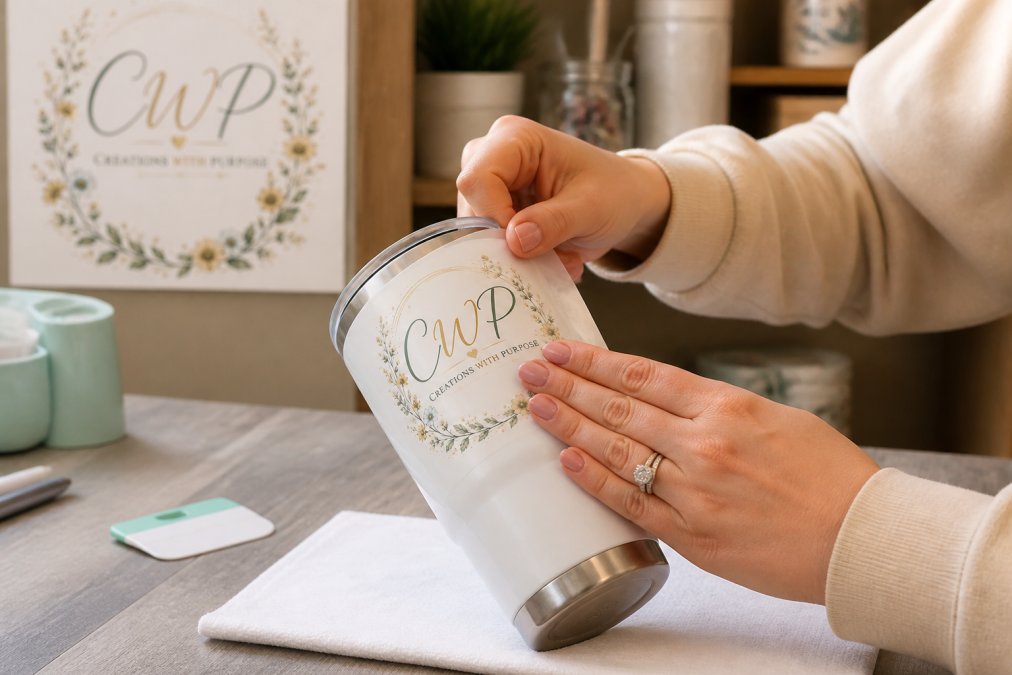
Removing the Carrier Film
Once the transfer is firmly adhered, slowly peel away the clear carrier film. If any portion of the design begins to lift as you peel, stop immediately, lay the film back down, rub firmly again, and continue peeling more slowly. Rushing this step can pull the design right off the surface.
When done correctly, the design stays on the blank and the carrier film releases cleanly. You're left with a finished product ready to ship or gift.
Creating with UV DTF Element Sheets: Versatility and Design Freedom
UV DTF element sheets offer something special that pre-cut wraps don't: creative control. These 9.5" x 14" sheets come packed with coordinated design elements, florals, borders, text, icons, patterns, that you can mix and match to create custom designs for any project.
The beauty of element sheets is flexibility. Cut out individual elements and layer them on tumblers, notebooks, glass cans, or any smooth hard surface. Create a unique design for one customer, then remix the same elements for someone else. You're not locked into one predetermined wrap design, you're building custom pieces.
Creations With Purpose's coordinated collections are designed specifically for this. Each collection includes multiple element sheets with complementary designs, so you can pull elements from different sheets and create cohesive, professional-looking projects. This approach appeals to customers who want something truly custom, and it lets you charge premium pricing because the work feels handcrafted and intentional.

Element sheets work beautifully on A5 notebooks, 20 oz and 40 oz tumblers, glass cans, acrylic blanks, and more. The coordinating design approach means you're not just applying a transfer, you're creating something that looks thoughtfully designed, not mass-produced.
Coordinating Craft Collections: Building a Cohesive Brand
When you're building a small craft business, consistency builds recognition. Customers remember brands that feel intentional and coordinated. This is where coordinating craft collections make a real difference.
Coordinating collections work across multiple product formats, element sheets, tumbler wraps, notebook covers, pen wraps, decals, and more. When you use the same design aesthetic across different products, your brand becomes instantly recognizable. A customer who buys a tumbler with your design is more likely to come back for a matching notebook cover or pen wrap.
This strategy also reduces your decision fatigue. Instead of hunting through thousands of designs and wondering which ones go together, you pick a collection and know every piece coordinates. You can offer curated bundles to customers: "Get the full Celestial Collection across tumbler, notebook, and pen wrap." Customers love the cohesiveness, and you move more inventory.
For live sales and events, coordinating collections give you a professional, polished presentation. Everything on your table looks intentional and matches. That visual consistency builds trust and makes your booth stand out from competitors with random, mismatched designs scattered everywhere.
UV DTF vs DTF Apparel: Understanding the Difference
This distinction matters because UV DTF and DTF apparel are completely different products with completely different applications.
UV DTF transfers are adhesive transfers designed for smooth, hard, non-porous surfaces like tumblers, glass cans, mugs, notebooks, decals, and acrylic blanks. They stick via pressure and adhesive, no heat required. You clean the surface, position the transfer, press it down firmly, and peel away the carrier film. The design stays put.
DTF apparel transfers, by contrast, are heat-applied transfers designed for fabric and clothing. These require a heat press set to specific temperatures and pressure settings. The heat bonds the transfer to the fabric fibers. DTF apparel and UV DTF are not interchangeable. Trying to apply a DTF apparel transfer to a tumbler won't work. Trying to heat-press a UV DTF transfer will damage it.
Creations With Purpose offers both product types, but they serve different markets. If you're building a tumbler and drinkware business, you want UV DTF wraps and element sheets. If you're printing custom apparel and t-shirts, you want DTF apparel transfers. Know which one you need before you order.
Profitable Niches and Product Ideas for UV DTF
The beauty of UV DTF small businesses is the range of niches you can target. The barrier to entry is low, so the opportunity is finding a niche where demand exceeds supply.
Custom tumblers remain the strongest category. Personalized gifts, team tumblers for small groups, branded tumblers for businesses, the market is far from saturated. Customers pay premium prices for quality, personalized drinkware, and many small makers are still using outdated methods or struggling with quality control.
Glass cans and 16 oz Libbey wraps are emerging as a secondary opportunity. These are trending in the gift and home decor space, and fewer makers are offering them compared to tumblers. Early movers in this category are seeing strong margins.
Notebook covers and pen wraps target a different customer: stationery enthusiasts, students, professionals who want functional items that look intentional. A5 notebook covers with coordinating pen wraps create a complete gifting package. Pricing is lower per unit than tumblers, but the volume potential is higher.
Decals and small UV DTF designs work well for event planners, wedding favors, corporate gifts, and party supplies.
Common Mistakes and Quality Control
The most common mistake is skipping surface preparation. Dust, fingerprints, and residue are invisible but they wreck adhesion. A 30-second wipe-down prevents 90% of application failures.
Scaling Your UV DTF Craft Business
Once you've validated your niche and built a customer base, scaling becomes a question of systems and inventory management.
Frequently Asked Questions
Do I need a heat press to apply UV DTF transfers?
No. UV DTF transfers are pressure-applied adhesive transfers that don't require heat, a heat press, curing, or cooling. You simply clean the surface, position the transfer, press it firmly onto the hard surface, and remove the carrier film. This makes UV DTF much faster and more accessible than heat-based methods, especially for small businesses just starting out.
What surfaces work best with UV DTF element sheets?
UV DTF element sheets work on smooth, hard, non-porous surfaces. Popular options include tumblers, glass cans, mugs, acrylic blanks, cutting boards, and notebooks. The key is a clean, smooth surface with no texture or coating that might prevent the adhesive from bonding. Always clean your surface thoroughly before application to ensure the best results.
How is UV DTF different from DTF apparel transfers?
UV DTF transfers are adhesive-based, pressure-applied transfers for hard surfaces like drinkware and decor. DTF apparel transfers are heat-applied transfers designed for fabric and clothing. They use completely different application methods, UV DTF requires no heat, while DTF apparel requires a heat press. Never mix up the two or use the wrong application method.
Can I use coordinating craft collections across different product types?
Yes. Many coordinating craft collections are available across multiple product formats, including UV DTF element sheets, tumbler wraps, notebook covers, pen wraps, and decals. This lets you create a cohesive branded look across different products and build a more complete product line without redesigning every item individually.